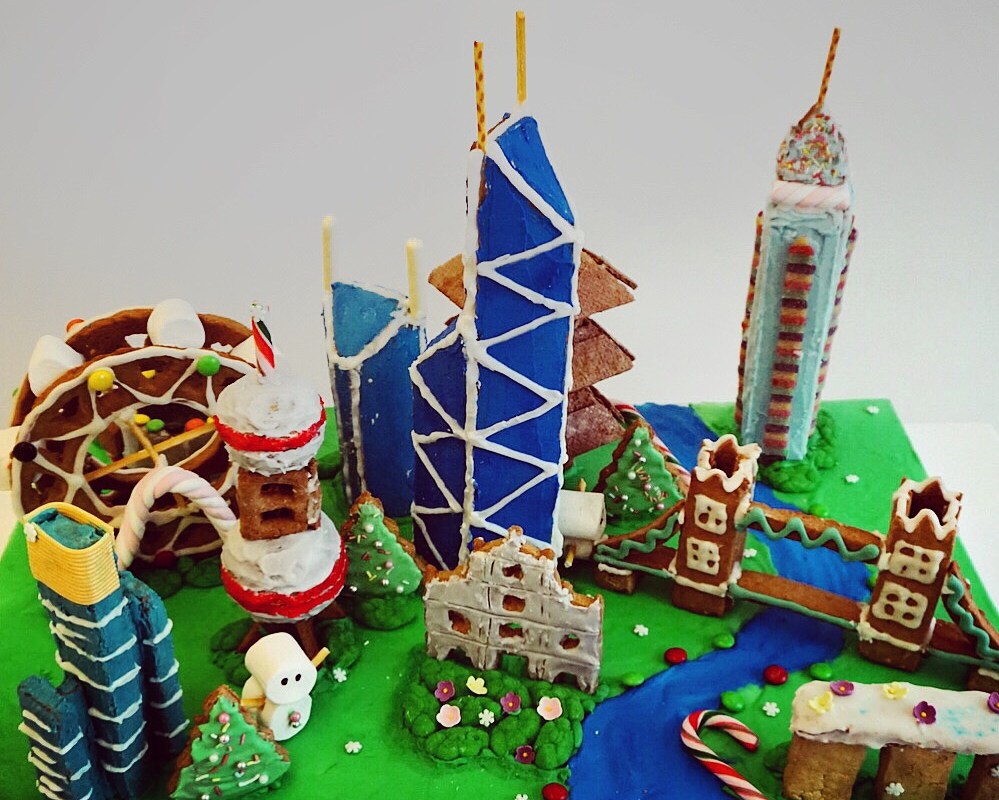
Having made my first gingerbread house last year (recipe in this post) I wanted to make something bigger and more complex this year. That’s where my Civil Engineering degree comes in handy – it was my childhood dream to build skyscrapers. I decided to take inspiration from some of the cities I’ve travelled to this year – Hong Kong (now home … I made this my centerpiece), Melbourne (old/second home), Tokyo, Shanghai, Macau, London and Singapore. I also wanted to include Boracay, Seoul and Kunming but didn’t want to over complicate the gingerbread model.
Components of the gingerbread city:
Hong Kong: Bank of China Tower, The Centre
Melbourne: Eureka Tower, Melbourne Central Office Tower, Melbourne Cricket Ground
London: Tower Bridge, London Eye (or it could have been a Ferris wheel from any city …)
Tokyo: Pagoda of Sensoji – it was meant to be five stories but I kept it to three so it didn’t outshine the Bank of China Tower
Singapore: Marina Bay Sands … although several people mistook this for the Stonehenge 😦
Shanghai: Oriental Pearl Tower
Macau: The Ruins of St Paul’s
Recipe:
I used the same recipe as last year, although required two batches of gingerbread and two batches of icing to make all the components for the gingercity
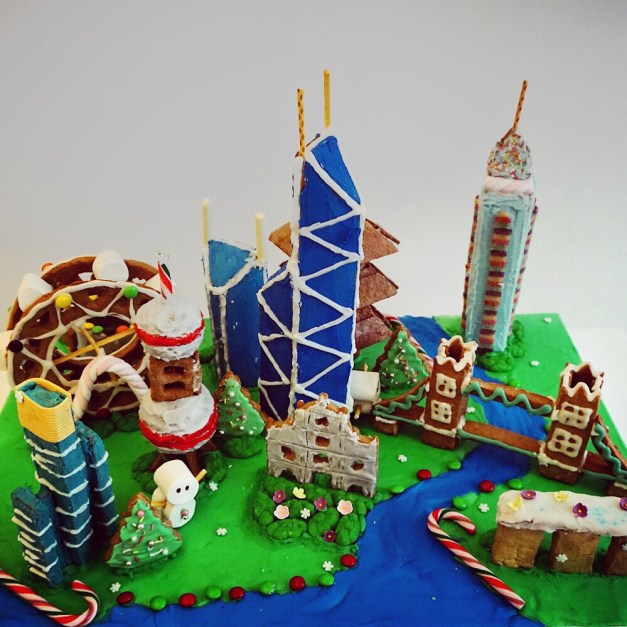
Finished Gingercity:
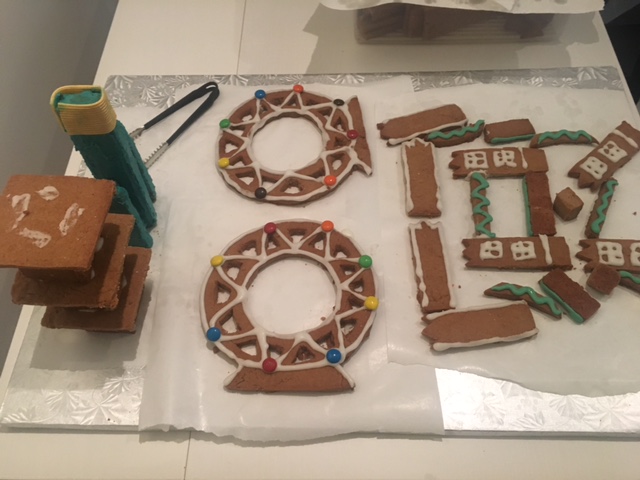
Gingerbread city – all the gingerbread piecesGingerbread city – starting to put together the landmarksGingerbread city – Deciding how to arrange the cityCompleted Gingerbread city
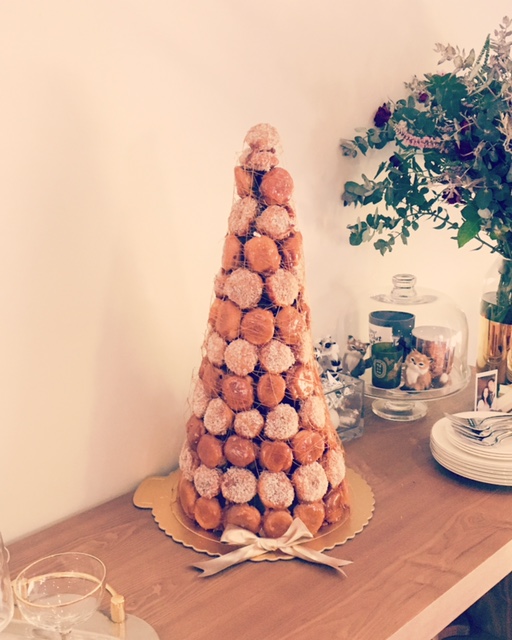
Having completed my practice croquembouche in Hong Kong several weeks ago, it was time to bake another croquembouche for family Christmas dinner. See earlier post for the full recipe and croquembouche made in Hong Kong.
For this croquembouche for Christmas day, I made several adjustments to the decorations – instead of randomly scattered profiteroles coated in coconut and crushed peanuts, this one contains layers of coconut and plain profiteroles.
My practice croquembouche also didn’t have any spun caramel as I wanted to keep the tower relatively neat. However, after several complaints about it not being a ‘real’ croquembouche without the spun caramel, I did manage to drape some caramel neatly around the profiterole tower. This caramel later melted due to the 35degree heat in Melbourne on Christmas day 😦
Overall, the family was very happy with Christmas dessert – from admiring the tower during dinner to eating the 80 leftover profiteroles several days after Christmas. The only bad feedback was from my sister-in-law who wasn’t too happy that I took the tower apart.
Now, to decide what to bake for Christmas next year …
Christmas is always an exciting time of year … work is quieter … people are in ‘holiday mode’ … the weather in Melbourne is lovely … AND I have more excuses to bake (and plenty of time to bake since the footy isn’t on).
Leading up to Christmas the past two years, I’ve baked for family dinners as well as charity fundraisers which both present their own challenges. This post showcases the cakes I baked for Christmas dinner in 2015 and as well as the macarons baked for a fundraiser leading up to Christmas in 2014.
I really enjoy baking macarons and will find an excuse to bake more macarons whether it’s for a wedding, Christmas, Easter or just any party. Here’s my selection of Christmas macarons for a Christmas charity fundraiser:
Christmas pudding macarons: decorated with tempered white chocolate
Christmas coloured macarons: raspberry and matcha flavoured
Reindeer macarons: red m&m’s for the nose and pretzel antlers
Christmas reindeer macarons
Christmas cakes:
Being in charge of dessert for my family’s Christmas dinner is always a challenge – trying to keep all 9 people happy which includes: my parents who don’t like anything too sweet, my sister who always requests something coffee flavoured and a brother-in-law who wants nothing but a tart (more specifically … the Strawberry and Berry Tart from Le Petit Gateau in Melbourne).
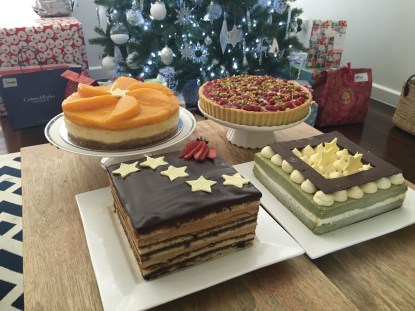
Given these requirements, I came up with the following desserts:
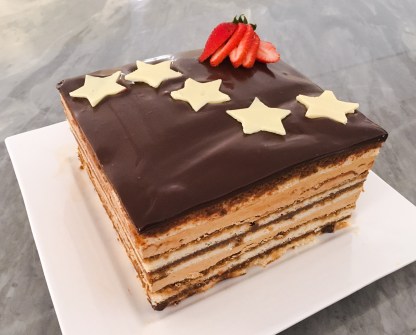
Opera cake: to meet the request of a coffee flavoured dessert
Matcha mousse cake: something not too sweet for the parents
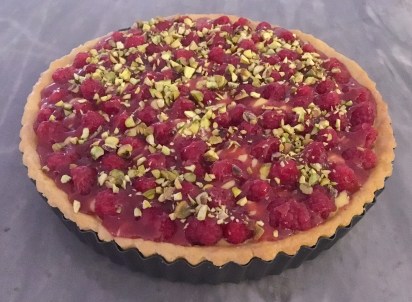
Raspberry & passionfruit tart: not quite the same as the tart from Le Petit Gateau, but still a tart with berries
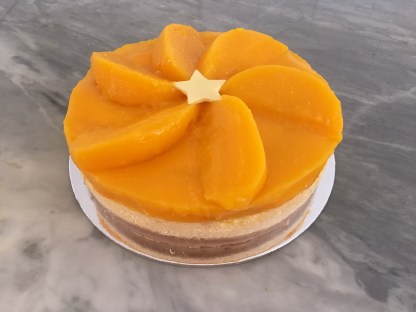
Mango Cheesecake: At this stage I may as well keep baking and use up everything I have in the fridge
All the cakes after four nights of baking
Opera cake:
A decadent cake made from layers of almond sponge soaked in coffee liquor syrup, chocolate ganache and coffee buttercream – this cake is always one of my favourites to bake (recipe to be posted soon).
Opera cake – one of my favourite cakes to bake and always a crowd pleaser
Matcha Mousse cake:
Following the matcha trend – I decided to bake a matcha and white chocolate mousse cake for my ‘not too sweet’ dessert. Sitting on top of the matcha almond sponge is a layer of white chocolate mousse which adds a hint of sweetness to the bitter matcha cake.
Matcha Mousse cake
Raspberry and Passionfruit tart:
Although the tarts from Le Petit Gateau look amazing, I opted for a more ‘traditional’ tart … baked in a tart pan with plenty of custard and topped with fruit. I made a passionfruit curd to add a bit more flavour to the custard and topped the tart with raspberries, raspberry jam and chopped pistachios. Not quite Le Petit Gateau standard … but still relatively happy with the finished product given it was my first tart or pastry crust attempt.
Raspberry & passionfruit tart
Mango Cheesecake:
I wasn’t joking earlier when I said that I was using up the ingredients in my fridge. We had several ripe mangos in the house and cream cheese in the fridge. The bright colour of the mango also looked great with the red/green/brown of the other cakes.
This was a very simple cheesecake to make, comprised of a Arnott’s Nice biscuit base, vanilla cheesecake (recipe to be posted soon) and a mango jelly.
Mango cheesecake
I’m always looking for new ideas and challenges for Christmas themed baking, so if you have any great posts or recipes, please share below 🙂
Difficulty: ★★★☆☆ … – gingerbread itself is very simple … the more stressful parts are designing the template and waiting for the icing to set to hold the house together.
Inspiration:
Growing up, my childhood dream was to become an architect. I’ve always had an interest in buildings and construction (having studied Civil Engineering), so baking a gingerbread house was a very exciting Christmas project for me.
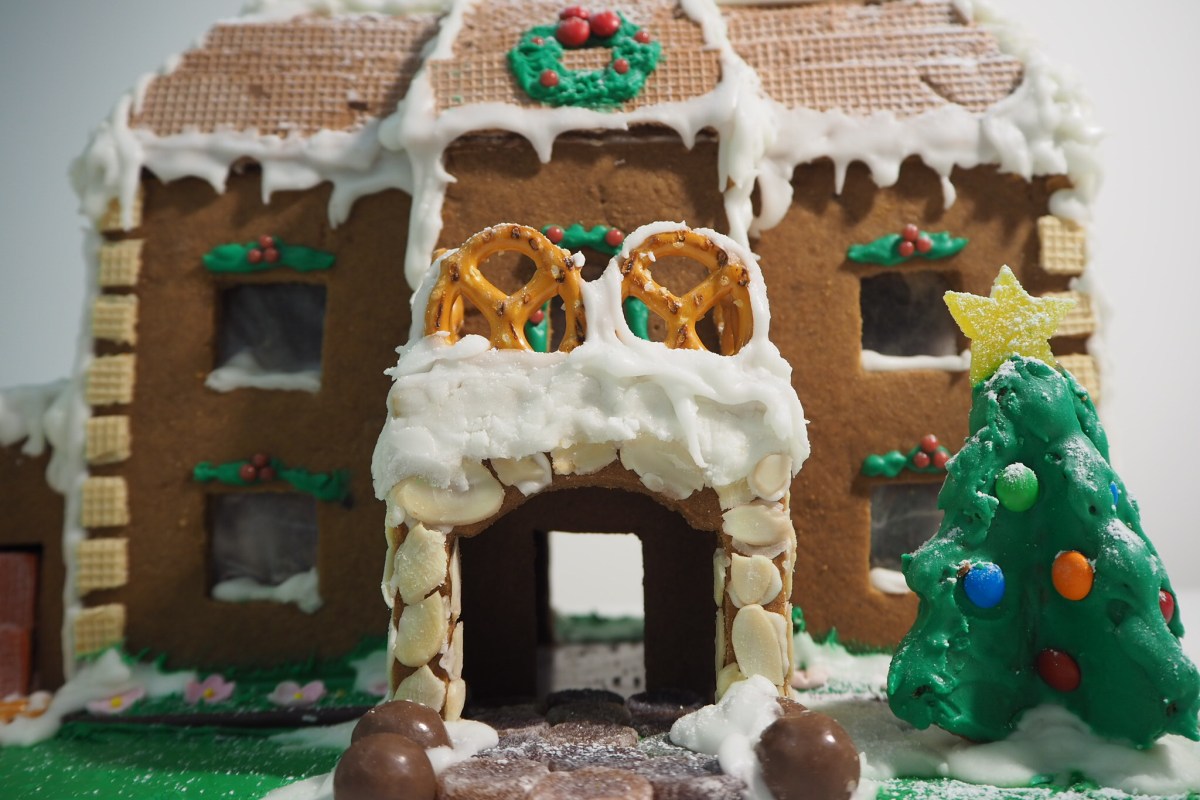
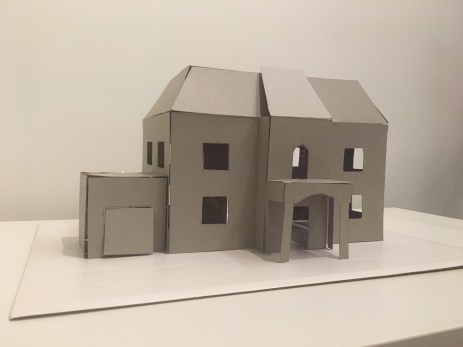
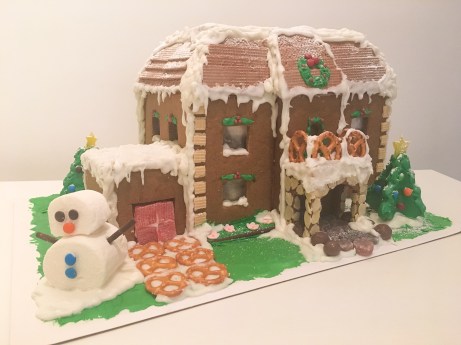
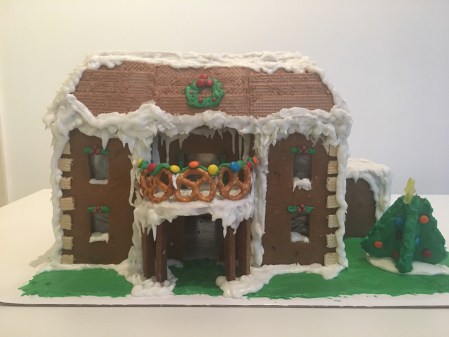
The inspiration for this gingerbread house? The French Provincial houses of the leafy Eastern suburbs of Canterbury and Kew in back home in Melbourne – featuring symmetrical proportions, steep roofs and a balcony. The Civil Engineering degree definitely came in handy when designing the house and roof dimensions and building a cardboard template.
Cardboard template
Ingredients:
Gingerbread (for a house ~ W30cm, H20cm, D20cm in size):
500g butter
400g dark muscovado sugar
10tsp golden syrup
1.2kg plain flour
4tsp bicarbonate soda
10g ground ginger
10g cinnamon powder
Royal Icing (made in 4 smaller batches):
4 egg whites
1kg pure icing sugar
To decorate – free to use whatever candy you can find, however this is what I chose:
maltesers as the rocks lining the side of the footpath
pastille lollies for the ’tiled’ footpath
rice paper sheets for the windows
marshmallow snowman
pocky sticks for the snowman arms
sour strap candy for the garage door and Christmas tree stars
almond flakes to line the ‘stone’ porch
preztels for the balconies and driveway
m&m Christmas lights
chocolate wafer roof
plain wafers for the corner detailing
Instructions:
Gingerbread:
Preheat oven to 200°C
Melt butter, sugar and golden syrup over low heat until all the butter has melted
Sift the flour, bicarbonate soda, cinnamon and ginger in a separate bowl
Stir melted butter into flour mixture to make a stiff dough
Divide the dough into 3-4 smaller batches and roll out to 1cm thickness
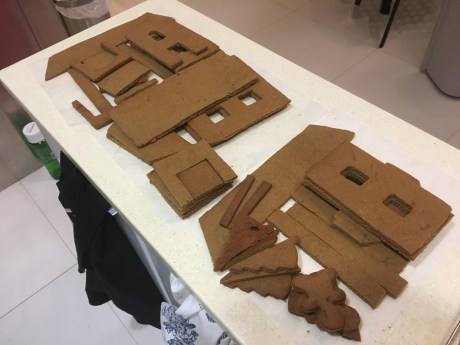
Tracing the cardboard template made earlier, cut out each piece of gingerbread
Cook in oven for 12 minutes until the edges start to brown
Remove from oven and allow to cool/dry to harden
all the baked gingerbread pieces
Royal icing:
Stir together egg whites and pure icing sugar until the mixture becomes a smooth icing
Place the icing sugar into a piping bag fitted with a small round nozzle and pipe along the edges of the gingerbread (one piece at a time) to join the house together. Ensure the walls of the house are completely dry before placing the roof on top of the house
gluing the pieces together with icing sugargingerbread house coming together
Decorate:
Use royal icing (resembling snow) to cover up the ‘messy’ corners and joints on the house
Also use royal icing to stick candy decorations to the house
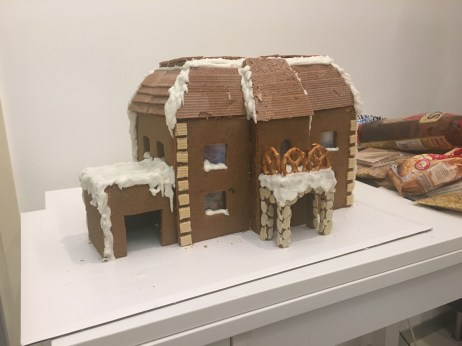
piping ‘snow’ to cover up the joints and cornersFront of the house all decoratedback of the house
Party time:
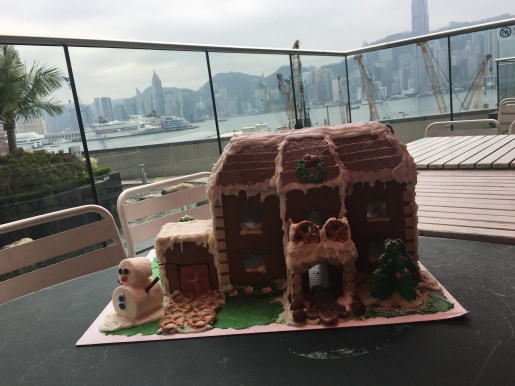
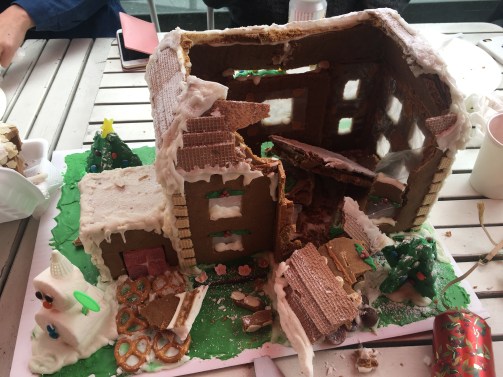
Whilst I had so much fun baking, building and decorating the house …. the most exciting part is definitely showing off your house to friends and then demolishing and eating the house.
time to show off the houseenjoying the lovely view of Hong Kongdemolished
I’ll admit that I was a little sad to tear the house apart, however we did enjoy snacking away at the gingerbread house on a lovely Saturday afternoon in the sun.
I’m already looking forward to designing and baking another gingerbread house next year! 🙂
Time required: 3 hours for the choux pastry, another 2 hours for filling and assembly
Difficulty: ★★★★☆ … Moderate to Difficult. Each step is relatively simple, however it takes time and patience to bring the whole thing together
Challenge:
After baking four cakes for Christmas dinner last year, I needed to bake something bigger and better for Christmas this year. However, an added challenge this year is that I am now living in Hong Kong and will only have one day to bake Christmas dessert once I arrive back home in Melbourne on Christmas Eve. This means I need something that can be baked in less than one day, can feed a family of 9 and also satisfies the requests I usually get from family: coffee, coconut, sweet, not too sweet … and of course it needs to have a touch of Christmas.
Enter croquembouche: makes ~80-100 profiteroles and can feed 15-30 people, it can be decorated to resemble a Christmas tree and you can make a range of fillings to meet every request … AND they look SPECTACULAR.
Inspiration:
I first saw croquembouche as an Adriano Zumbo challenge on Masterchef Australia several years ago. Touted as a very difficult challenge on Masterchef, I never even thought about making a croquembouche until several weeks ago when I was desperately thinking up Christmas ideas.
Having never baked profiteroles before, I read several blogs, watched a range of youtube videos and viewed countless Instagram photos in search of inspiration for decorating to make it fit the Christmas theme.
I decided to use my eclair recipe for the choux pastry. As for decorating, I went for a ‘cleaner’ croquembouche without the caramel strings and added pops of texture by coating some profiteroles in coconut or crushed peanuts. I also found some lovely ribbon at the Eslite Bookstore in Hong Kong to top off the croquembouche.
This post details my ‘practice’ croquembouche … I will be making the real one on Christmas Eve and will upload an update post-Christmas 🙂
Ingredients:
Choux Pastry (makes ~100 profiteroles):
310g bread flour, sifted
250ml water
250ml milk
250g butter
30g caster sugar
8-10 eggs
2tsp salt
Custard filling:
950ml milk
8 egg yolks
120g caster sugar
80g corn starch
30g unsalted butter
2tsp vanilla bean paste
For decorating:
500g sugar to assemble the croquembouche
200g crushed peanuts
100g shredded coconut
Note: you could also use sugar crystals, pearls or anything else you would like to decorate the individual profiteroles
Instructions:
Choux pastry:
Preheat oven to 200°C
Place the water, milk, butter, sugar and salt into a saucepan over low heat
Once the mixture just comes to a boil, take off the heat, pour in all the flour and mix thoroughly with a wooden spoon (it should now look like mashed potato)
Place the mixture back on low heat and continue to mix for another 2-3mins until the dough forms a ball and comes away from the sides of the pan
Pour the dough into a bowl and mix with wooden spoon to cool slightly before adding the eggs
Add the eggs one at a time and ensure each egg is well incorporated before adding the next egg. This allows greater control over the amount of egg to ensure the mixture doesn’t become too runny from too much egg
The mixture is ready when you lift the wooden spoon and the dough slowly falls off the spoon
Place dough into a piping bag fitted with a 1cm plain round nozzle and pipe balls around 2-2.5cm in diameter
Dip a fork into water and slightly flatten the piped circles. The fork indents also reduce cracking in the oven
Bake for 10mins at 200°C and then reduce the temperature to 180°C and bake for another 20mins
Custard filling:
Whisk together egg yolks and sugar until pale
Add in the cornstarch and whisk
Place milk over low-med heat until it comes to a light boil
Remove milk from heat and pour 1/3 of the milk into the egg mixture while continually whisking
Pour the egg mixture into the remaining 2/3 of the milk and place back on low heat. Continue to whisk until the custard thickens
Stir in butter and vanilla
Transfer this to a bowl to cool – at this stage you could also break the custard into smaller batches and create several flavours by whisking in melted dark chocolate, fruit puree or coffee syrup
Cover in glad wrap (with the glad wrap touching the surface of the custard) and refrigerate until it’s time to assemble the croquembouche.
Ready to go into the oven
Puffed up in the oven
decorated with caramel + crushed peanuts and coconut
Construction begins
Assembling the croquembouche:
Transfer the custard into a piping bag fitted with a long piping tip and fill each profiterole with custard. Be sure to poke the piping tip through the side of the profiterole which will be facing the inside of the croquembouche
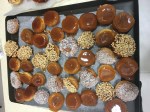
Melt sugar over low heat until all the sugar is melted and is a light amber colour (you could also make a sugar syrup by adding water). Carefully dip the bottom of each profiterole and place the toffee side up on the tray to dry – at this stage I also coated around half of the profiteroles with either shredded coconut or crushed peanuts
Trace a circle template on a sheet of baking paper
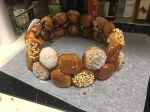
Construct the croquembouche by carefully lining the profiteroles around the circle; sticking each profiterole together using the toffee ‘glue’
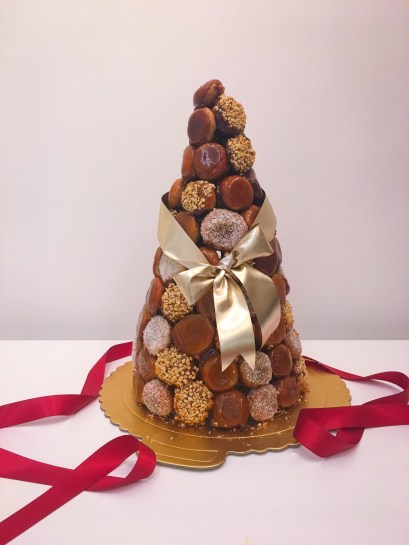
The finished product!!
Tips for serving:
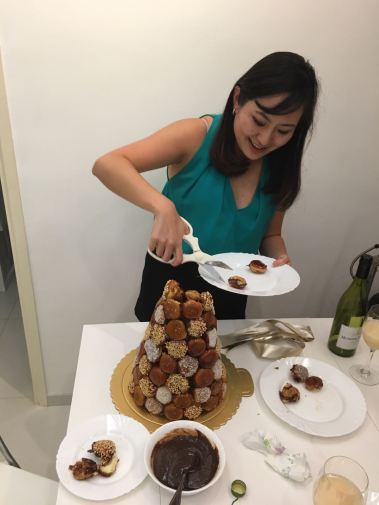
The profiteroles can be cut away from the tower using a pair of scissors
I also pulled together a bowl of dark chocolate ganache (150g dark chocolate, 100ml cream) for guests to dip the profiteroles into while serving











 Whatever it bakes